

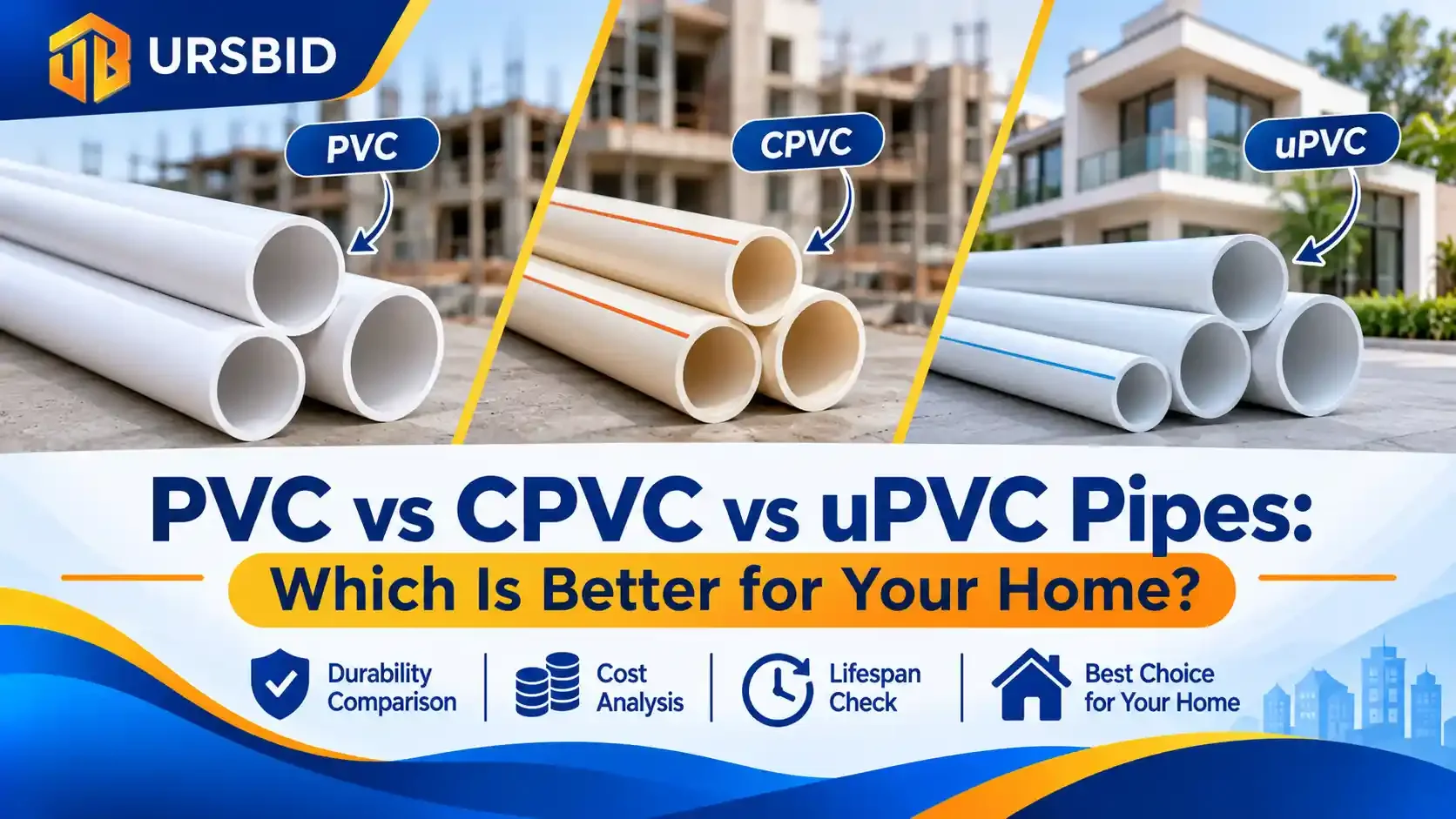
Ask a plumber for a "PVC pipe" and he may bring uPVC. Ask for hot water pipe, and he will bring CPVC. Ask for the difference, and you may get three different answers. The names sound alike, and that causes real mistakes, like running hot water through a cold-water pipe.
This guide explains PVC vs CPVC vs uPVC pipes in simple words. You will see what each one is, how hot each can go, how they are joined, and what they cost.
What Is the Difference Between PVC, uPVC and CPVC Pipes?
PVC is the base plastic. uPVC is rigid PVC with no softener, and CPVC is PVC with extra chlorine added for heat resistance. The big practical difference is temperature.
Plain PVC can be soft and flexible when softeners are added. uPVC is the rigid form used for plumbing. CPVC is made by chlorinating PVC, which lets it handle hot water. Here is a quick comparison:
|
Feature |
PVC (flexible) |
uPVC (rigid) |
CPVC |
|
Softener (plasticiser) |
Yes |
No |
No |
|
Chlorine content |
About 57% |
About 56% to 57% |
About 63% to 69% |
|
Top working temperature |
Low, not for plumbing |
About 60°C |
About 93°C |
|
Indian standard |
Not for water pipes |
IS 4985 (pressure), IS 13592 (SWR) |
IS 15778 |
|
Main use |
Hoses, cable cover, flexible parts |
Cold water, drainage, irrigation |
Hot and cold water |
|
Cost |
Low |
Low |
Higher |
For hot water supply in homes, CPVC pipes are the usual choice. For cold water and drainage, uPVC is the usual choice.
What Is the Difference Between PVC and uPVC?
PVC and uPVC are almost the same material for plumbing. The "u" means unplasticised, or no softener added. In rigid pipe, PVC and uPVC are the same, and most pipes sold for plumbing in India are uPVC.
Soft or flexible PVC has plasticiser added, so it bends. It is used in hoses and cable insulation. It is not used for water supply pipes. Rigid pipe for water has no plasticiser, so it stays strong and stiff. So when someone says "PVC pipe" for plumbing, they almost always mean uPVC.
What Is the CPVC Pipe Temperature Limit?
The CPVC pipe temperature limit is about 93°C. uPVC is limited to about 60°C. Above 60°C, uPVC loses its pressure rating.
Both pipes are rated for full pressure at about 23°C. As the water gets hotter, the pressure rating drops for every plastic pipe. At 60°C, uPVC keeps only about 22% of its rating, while CPVC keeps about 50% to 63%. At 93°C, uPVC is not rated at all, and CPVC keeps about 20% to 25%. (Pressure data source: 4B Factory, CPVC vs uPVC vs PVC Pipes.)
Some Indian guides quote CPVC at 82°C for continuous service, and others at 93°C. Check the rating on the pack of the pipe you buy.
Which Is Better: uPVC or CPVC?
Neither is better everywhere. Use uPVC for cold water and drainage. Use CPVC for hot water and for mixed hot and cold systems.
|
Job |
Better pipe |
Why |
|
Overhead tank to taps (cold) |
uPVC or CPVC |
Both are fine at cold temperatures |
|
Geyser and hot water lines |
CPVC |
uPVC softens above about 60°C |
|
Drinking water lines |
CPVC or uPVC with IS 4985 |
Check the IS mark |
|
Soil, waste, and rainwater drainage |
uPVC (SWR) |
Heat resistance adds cost and no benefit |
|
Irrigation and borewell |
uPVC |
Cold water at normal temperature |
|
Whole indoor system |
CPVC |
One material, no mixing |
Many builders run CPVC for the whole indoor system, so they use one material and one cement. Others use uPVC for cold lines to save money, and CPVC only for hot lines.
uPVC vs CPVC Cost: Which Is Cheaper?
uPVC is cheaper. uPVC costs about Rs 60 to 150 per metre and CPVC about Rs 120 to 280 per metre. CPVC often costs about double.
|
Pipe |
Price per metre (Rs, approx.) |
|
uPVC |
60 to 150 |
|
CPVC |
120 to 280 |
(Price source: Balaji Builds, Plumbing Materials Guide India 2026.)
For a 100 m run, uPVC would cost about Rs 6,000 to 15,000, and CPVC about Rs 12,000 to 28,000. That is my arithmetic from the ranges. Prices depend on the pipe size, pressure class, and brand.
For a typical home, the extra cost of CPVC for hot lines is small compared with the cost of redoing a wall after a failure. So CPVC is worth it where the water is hot.
How Are These Pipes Joined?
uPVC and CPVC are joined with solvent cement, and each one needs its own cement. Never use uPVC cement on a CPVC joint.
CPVC needs CPVC-grade solvent cement, applied to a clean, dry, deburred pipe end, then left to cure before pressure testing. A joint made with uPVC cement on CPVC never reaches full strength. Also, CPVC is sized differently. It follows copper tube sizing, so its fittings do not match uPVC fittings. Never swap fittings between the two.
A skilled plumber matters here. You can find water supply and sanitary work services on URSBID.
What Mistakes Should You Avoid With PVC, CPVC and uPVC Pipes?
- Do not use uPVC for hot water. It softens above about 60°C and joints fail.
- Do not use uPVC cement on CPVC. Use the right cement for each.
- Do not mix fittings from the two systems. Sizes differ.
- Do not use drainage (SWR) pipe for pressure lines. SWR pipe is for non-pressure flow.
- Do not buy pipe without the IS mark. Look for IS 4985 on uPVC pressure pipe and IS 15778 on CPVC.
- Do not ignore the pressure class. Match the class to the pressure from your tank or pump.
Where Can You Buy PVC, CPVC and uPVC Pipes Online?
You can buy pipes online through URSBID by posting your requirement and getting quotes from verified suppliers.
Once you know which pipe goes where, the next step is to compare rates. To Buy Water Supply Pipes Online through URSBID, share the pipe type, size, pressure class, length, and delivery place. Registered vendors will send their quotations directly to you. Ask each one for the IS code and the solvent cement to match.
Frequently Asked Questions
What is the difference between PVC, uPVC, and CPVC pipes?
PVC is the base plastic. uPVC is rigid PVC with no softener and is used for cold water and drainage. CPVC has extra chlorine, so it can handle hot water.
Is uPVC the same as PVC?
For plumbing, yes in practice. Rigid PVC pipe is uPVC. Flexible PVC has plasticiser and is used for hoses and cables.
What is the temperature limit of CPVC pipes?
About 93°C. uPVC is limited to about 60°C. Some guides quote 82°C for continuous CPVC service, so check the pack.
Is CPVC more expensive than uPVC?
Yes. CPVC costs about Rs 120 to 280 per metre, and uPVC about Rs 60 to 150, so CPVC is often about double.
Can I use uPVC for hot water?
No. uPVC softens above about 60°C and loses its pressure rating. Use CPVC for hot water.
Final Thoughts
The three names sound alike, but the choice is simple. Plumbing PVC is uPVC. uPVC is the cheap, strong choice for cold water and drainage. CPVC is the heat-resistant choice for hot water and whole-house systems. Use the right cement and fittings for each, check the IS mark, and never run hot water through uPVC. Do that, and your pipes will serve you quietly for decades.
Ready to compare prices? Get water supply pipe rates on URSBID by posting your requirement, and receive quotes from verified suppliers.